

Care guide
Start with the job in front of you.
Household surfaces and your pet’s coat need different tools.
A material-first approach
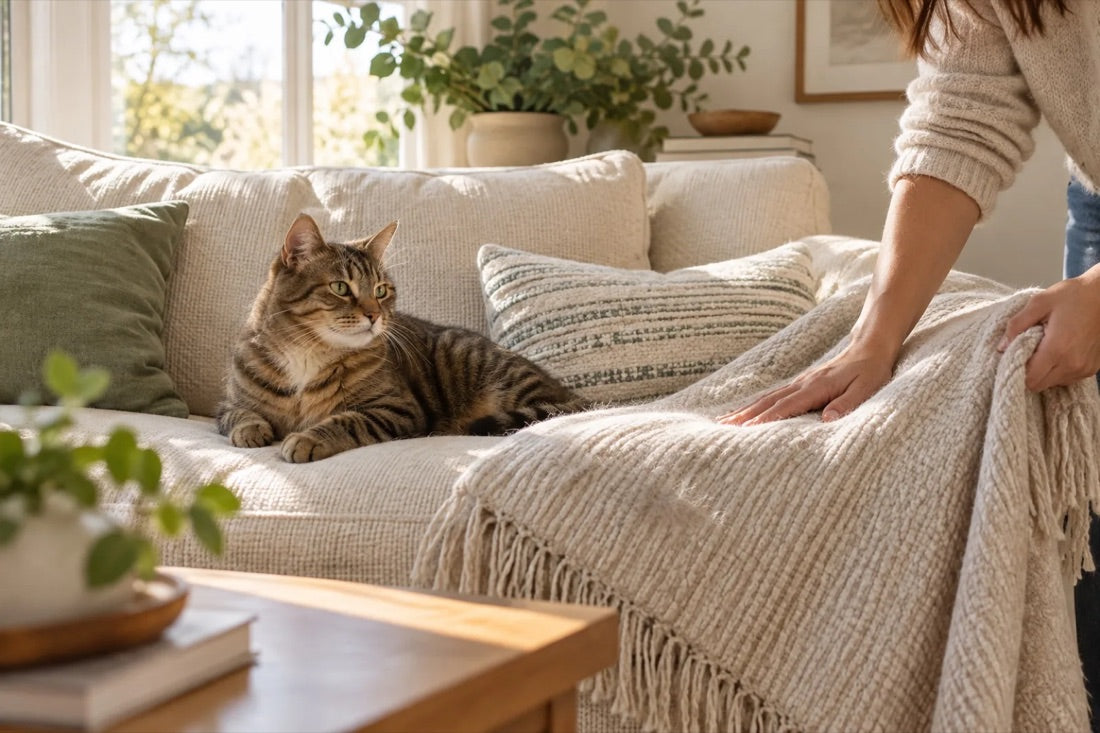
Different surfaces need different techniques. Follow these steps for household surfaces.
- 01
Check the care label.
Review the care label on your furniture for specific instructions. Look for loose threads, delicate finishes, and any restrictions on brushing or abrasion.
- 02
Test a hidden area.
Use light pressure somewhere inconspicuous. Stop if the fabric catches, pills or changes appearance.
- 03
Work in small sections.
Use short, controlled passes as the tool directs. Check the result regularly and remove collected hair after use.
Choosing a tool?
Check the product’s intended use and compatibility. If these are unclear, ask before choosing.
Coat care has its own routineCare for the coat
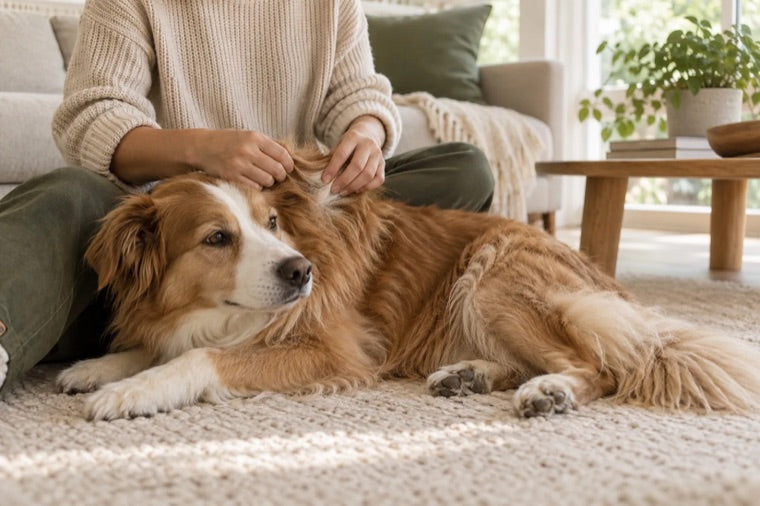
Your pet’s coat needs a different approach. These general guidelines can help.Follow these general guidelines to help manage loose fur during routine grooming.
Match stated coat suitability.
Check the product’s stated suitability for coat length, density and the job you want to do.
Use short, gentle sessions.
Use gentle pressure and work with your pet’s comfort. Pause often and check the skin and coat.
Stop at resistance or discomfort.
Do not pull through resistance. Stop if you see redness or your pet shows discomfort.
When to pause and ask.
Delicate or damaged upholstery may need advice from the furniture maker or a qualified cleaner. Tight mats, skin irritation, pain or sudden changes in shedding need advice from a professional groomer or veterinarian.
Always follow the specific product and material instructions. This guide is general care guidance, not a compatibility guarantee or a substitute for professional advice.